
Introduction
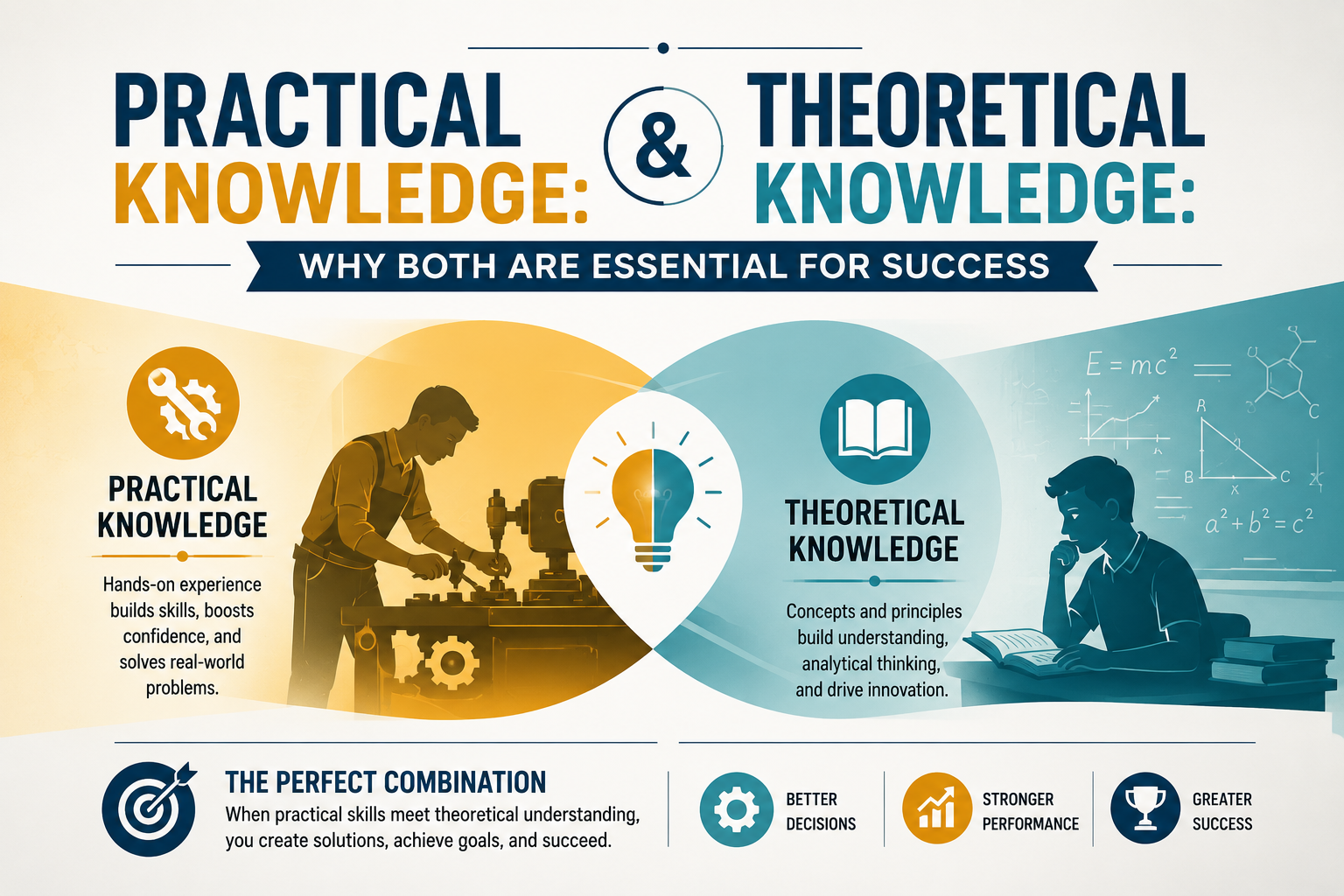
In today’s competitive world, education is not just about learning concepts from books; it is also about applying those concepts in real-life situations. This is where the importance of both theoretical and practical knowledge comes into play. While theoretical knowledge provides the foundation of understanding, practical knowledge helps individuals develop the skills needed to perform tasks effectively.
Students and professionals who possess a balance of both are better prepared for academic success, career growth, and real-world challenges.
What is Theoretical Knowledge?
Theoretical knowledge refers to the information, concepts, principles, and facts that are learned through books, lectures, research, and classroom instruction. It focuses on understanding the “why” behind a subject.
For example, a student studying computer science learns programming concepts, algorithms, and software development theories in the classroom. This knowledge forms the basis for understanding how technology works.
Benefits of Theoretical Knowledge
- Builds a strong foundation of concepts and principles.
- Improves analytical and critical thinking skills.
- Helps in understanding complex subjects.
- Provides a framework for problem-solving.
- Supports innovation and research.
What is Practical Knowledge?
Practical knowledge refers to the ability to apply theoretical concepts in real-life situations. It is gained through hands-on experience, internships, projects, laboratory work, training programs, and workplace exposure.
For example, a student may learn hotel management theories in class, but working in a hotel environment helps them understand customer service, operations, and industry practices.
Benefits of Practical Knowledge
- Enhances job-ready skills.
- Builds confidence and competence.
- Improves problem-solving abilities.
- Provides real-world experience.
- Makes learning more engaging and effective.
Why Both Are Important
Many students focus only on academic performance, while employers increasingly seek candidates who can apply their knowledge effectively. The combination of theoretical and practical learning creates a well-rounded individual.
Better Understanding
Practical experience helps students understand how theoretical concepts work in real situations, making learning more meaningful.
Improved Employability
Companies prefer candidates who have both subject knowledge and practical skills. Internships, projects, and vocational training give students a competitive advantage.
Increased Confidence
Hands-on experience allows learners to practice their skills, reducing uncertainty and increasing confidence in professional environments.
Stronger Problem-Solving Skills
Real-world challenges often require applying theoretical knowledge creatively. Practical exposure teaches individuals how to adapt and find solutions.
Examples Across Different Fields
Engineering
Students learn scientific theories in classrooms and apply them through workshops, laboratory experiments, and industrial training.
Healthcare
Medical students study human anatomy and diseases while also gaining clinical experience in hospitals.
Information Technology
IT professionals learn programming concepts and then develop software, websites, and applications through practical projects.
Hotel Management
Students learn hospitality principles and gain practical exposure through internships in hotels and hospitality organizations.
The Role of Skill Development Programs
Skill development programs bridge the gap between classroom education and industry requirements. These programs provide practical training, industry exposure, and hands-on learning opportunities that prepare students for successful careers.
Vocational training, internships, apprenticeships, and certification courses help learners acquire the practical skills needed to meet modern workforce demands.
How Students Can Gain Practical Knowledge
- Participate in internships and industrial training.
- Work on live projects and case studies.
- Attend workshops and seminars.
- Join skill development and vocational courses.
- Volunteer for practical assignments and events.
- Engage in laboratory and fieldwork activities.
Conclusion
Theoretical knowledge and practical knowledge are not competitors; they complement each other. Theoretical learning provides the foundation, while practical experience transforms knowledge into action. In today’s fast-changing world, students who combine academic understanding with hands-on skills are more likely to succeed in their careers and adapt to industry requirements.
To build a successful future, learners should focus on gaining both knowledge and experience, ensuring they are prepared not only to understand the world but also to contribute meaningfully to it.